A major strategic project is behind schedule. Again.
The project manager is experienced. Status reports are timely, risks are documented, and steering committee meetings are happening.
Still, the work drags. Decisions wait. People get pulled onto competing priorities. Teams have trouble adopting the change, and the expected business results remain out of reach.
If you’ve experienced this, you’re not alone.
Organizations often respond to delivery challenges by hiring project managers. Sometimes that’s exactly the right move.
But when you’ve already invested in project management support, and the same problems continue to surface, it’s worth asking a different question: What if the issue isn’t project management at all?
When leaders say a project “isn’t delivering,” they usually mean the work failed to produce the business outcome they expected.
The system was implemented. The process was launched. The project team completed the work. Yet the organization still isn’t seeing the value it expected.
Projects are often judged by whether work was completed.
Strategic initiatives are judged by whether results were achieved.
Those are two very different standards. And the gap between them is where many organizations struggle.
Why Hiring a PM Often Feels Like the Right Answer
When strategic initiatives begin to stall, the symptoms are easy to spot:
- Missed deadlines
- Resource conflicts
- Lack of visibility
- Slow decision-making
Project management seems like a logical response. Project managers create structure and help work keep moving when competing priorities start pulling people in different directions.
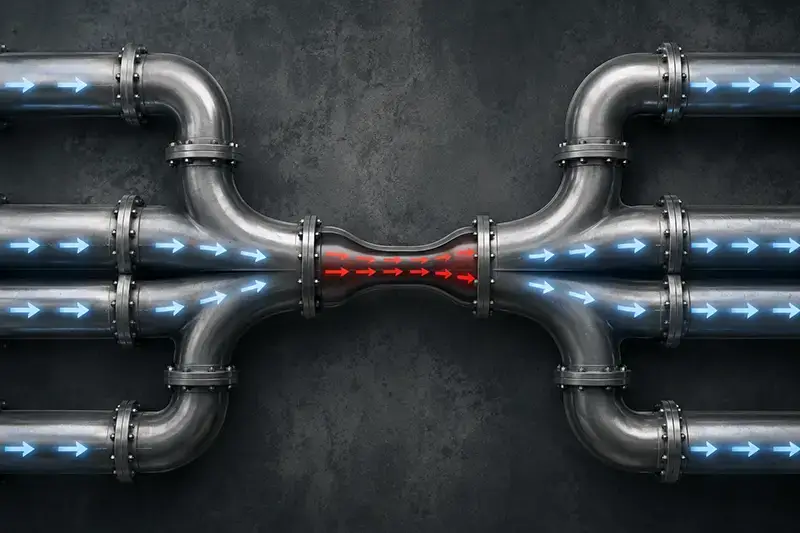
Many obstacles that slow strategic work come from the environment around the project rather than the project team itself.
A project manager can:
- Identify a decision bottleneck. But they can’t make the decision.
- Highlight resource conflicts. But they can’t create capacity.
- Escalate adoption risks. But they can’t create executive sponsorship.
- Report that expected benefits are unlikely to be realized. But they may not own the business outcomes themselves.
When these challenges persist despite capable project leadership, the organization may be facing something larger than a project management problem.
The Missing Piece: Execution Infrastructure
Most organizations invest heavily in infrastructure.
✓ Technology infrastructure.
✓ Financial infrastructure.
✓ Operational infrastructure.
Far fewer think intentionally about execution infrastructure.
Execution infrastructure is how an organization makes decisions, funds priorities, assigns people, and follows through after launch.
It includes:
- Clear decision-making authority
- Active executive sponsorship
- Governance that accelerates rather than delays progress
- Resource allocation aligned to priorities
- Accountability for outcomes
- Change adoption capabilities
When these elements are strong, strategic initiatives gain momentum.
When they’re weak, even experienced project managers spend much of their time navigating organizational obstacles instead of driving results.
The Difference Between a Project Management Problem and an Execution Problem
If you’ve hired capable project managers and continue to experience the same delivery challenges, the project manager may not be the constraint. The system may be.
Organizations often read recurring delivery challenges as a capacity problem. In many cases, the pattern points to the execution environment instead.
Before You Hire Another PM, Evaluate Your Execution Infrastructure
The idea of improving execution capability can feel overwhelming.
Fortunately, you don’t need an enterprise transformation to identify where the biggest challenges exist.
Start by evaluating these six areas.
1. Is Decision-Making Authority Clear?
Choose a strategic initiative that missed a milestone.
- When an important decision needed to be made, was it clear who owned the decision?
- Or did teams spend time seeking alignment, escalating issues, or waiting for multiple stakeholders to weigh in?
Even strong project management cannot compensate for unclear decision ownership.
2. Is Executive Sponsorship Active?
Think about your most important strategic initiative.
- Can the executive sponsor clearly articulate why the initiative matters, what success looks like, and what decisions they are expected to make?
- Do they actively remove obstacles when issues arise?
Executive sponsorship is often assigned during project kickoff. The organizations that execute well maintain sponsorship throughout the life of the initiative.
3. Does Governance Accelerate Progress?
Review the approvals, reviews, and governance checkpoints associated with a recent initiative.
How much time was spent preparing for governance activities versus moving work forward?
Good governance creates clarity and enables decisions. Poor governance creates delays without improving outcomes.
4. Do Resource Commitments Match Strategic Priorities?
Review your top strategic initiatives.
Now compare them to actual resource availability. Not planned availability. Actual availability.
Are the same people supporting multiple initiatives while also maintaining day-to-day operations?
If so, the organization may have committed to more strategic work than it can realistically support.
5. Who Owns the Outcome?
Does every initiative have someone accountable for realizing business value after implementation?
If ownership becomes unclear once the project team finishes its work, benefits realization often becomes everyone’s responsibility. In practice, that means no one owns it.
6. Can the Organization Adopt the Change?
Think about a recent initiative that technically succeeded but failed to deliver the expected business results.
- Were leaders prepared to reinforce new behaviors?
- Did employees understand what was changing and why?
- Were adoption metrics tracked after implementation?
Many strategic initiatives fail to realize their intended value because the organization never fully adopts the change.
The Strategic Execution Question to Ask Before Hiring Another PM
If you’ve already invested in project management capability and still see the same delays, capacity conflicts, adoption issues, and unrealized benefits, rather than asking if you need more project managers, a better question may be:
Do we have the execution infrastructure required to turn strategy into results?
When execution challenges persist despite capable project leadership, the most valuable investment may not be another project manager. It may be strengthening the system that surrounds them.